VEREA

Category: Sourcing & OEM

  • Private Label Hair Color: What a Korean Factory Can Do for Your Brand

    Private Label Hair Color: What a Korean Factory Can Do for Your Brand

    Private label hair color means selling a formula the manufacturer already owns, under your own brand. You are not buying a recipe; you are buying access to a product that has already been made at volume, and the right to put your name on it. The four levers you can actually pull are the formula, the shade range, the packaging and the kit — and most private label programmes succeed or fail on how well the brand owner understands which of those four is worth arguing about.

    Private label, OEM and distribution are not the same thing

    The terms get used loosely, so it is worth being precise, because the three routes carry very different amounts of risk and control.

    • Distribution. You import the manufacturer’s brand and sell it as it is. Lowest investment, fastest start, least control. Your equity accrues to someone else’s brand.
    • Private label. The manufacturer’s existing formula ships under your brand, in your packaging. Moderate investment. You own the customer relationship and the brand equity; the factory owns the formula.
    • OEM / custom development. The formula itself, the shade range, the pack and the kit are developed to your specification. Highest investment and longest timeline, most control.

    With VEREA, made in Korea by Dr.BOM, all three are open, because the brand and the factory are the same company. That is unusual and worth checking wherever you source: if the brand you are talking to does not own the plant, the private label conversation has an extra party in it, and extra parties cost you both money and flexibility.

    Lever one: the formula (change it last, if at all)

    The instinct of a new brand owner is to customise the formula. Usually this is the least valuable change you can make and the most expensive.

    A formula that has been produced for years is a formula whose problems have already been found. If what makes the product worth selling is in that formula — and with a patented 1-minute processing time, it is — then changing it is not differentiation, it is risk. VEREA’s 1-minute coloring technology is registered as a patent in Korea and the United States; a private label partner gets the benefit of that without having to develop or defend it.

    Keep the formula. Spend your energy on the three levers your customer actually sees.

    Lever two: the shade range (this is where markets differ)

    Shade strategy is where a private label programme is won. A range that sells in one market can be dead weight in another: gray coverage carries the volume in some, brightening shades in others, and the naming conventions shoppers understand vary just as much.

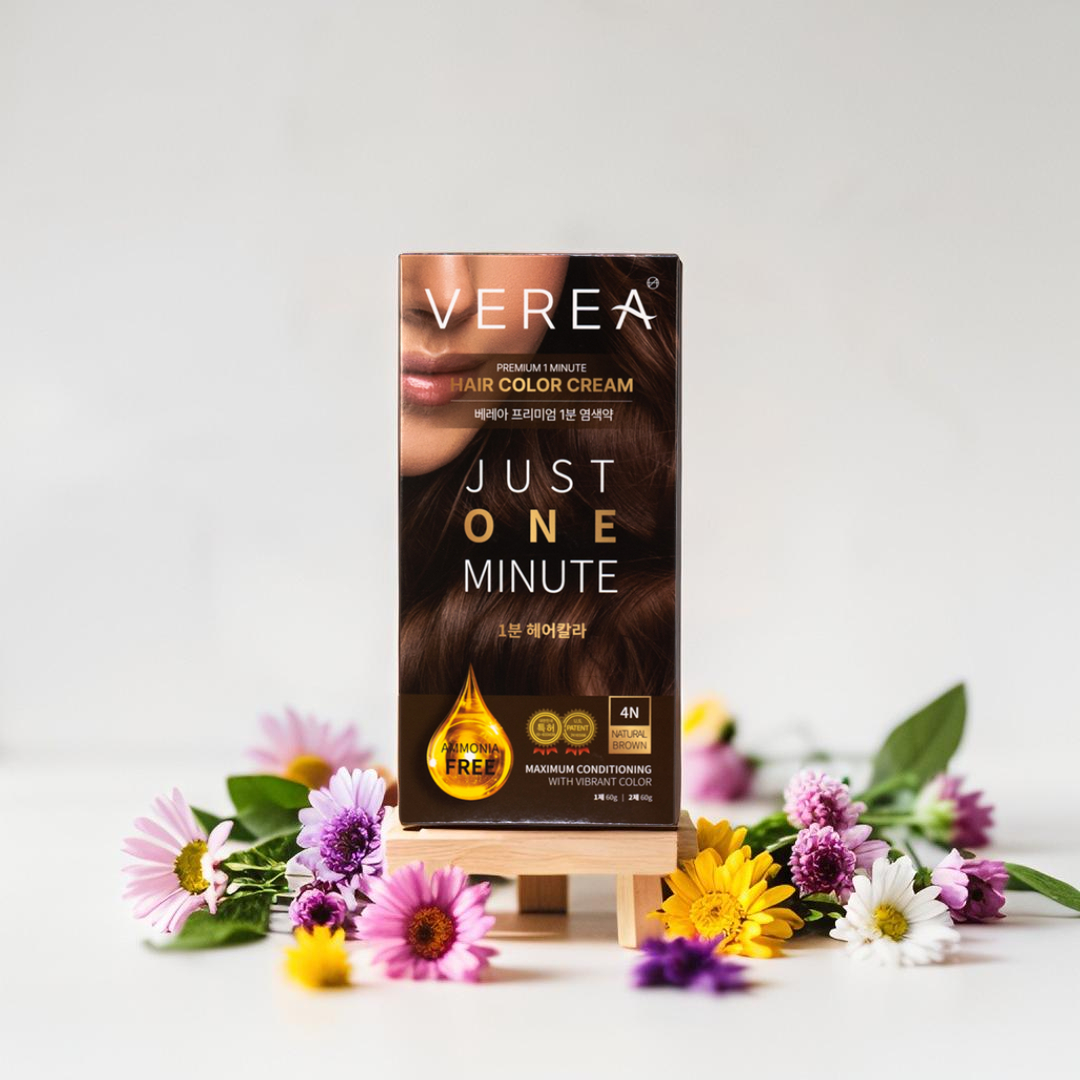
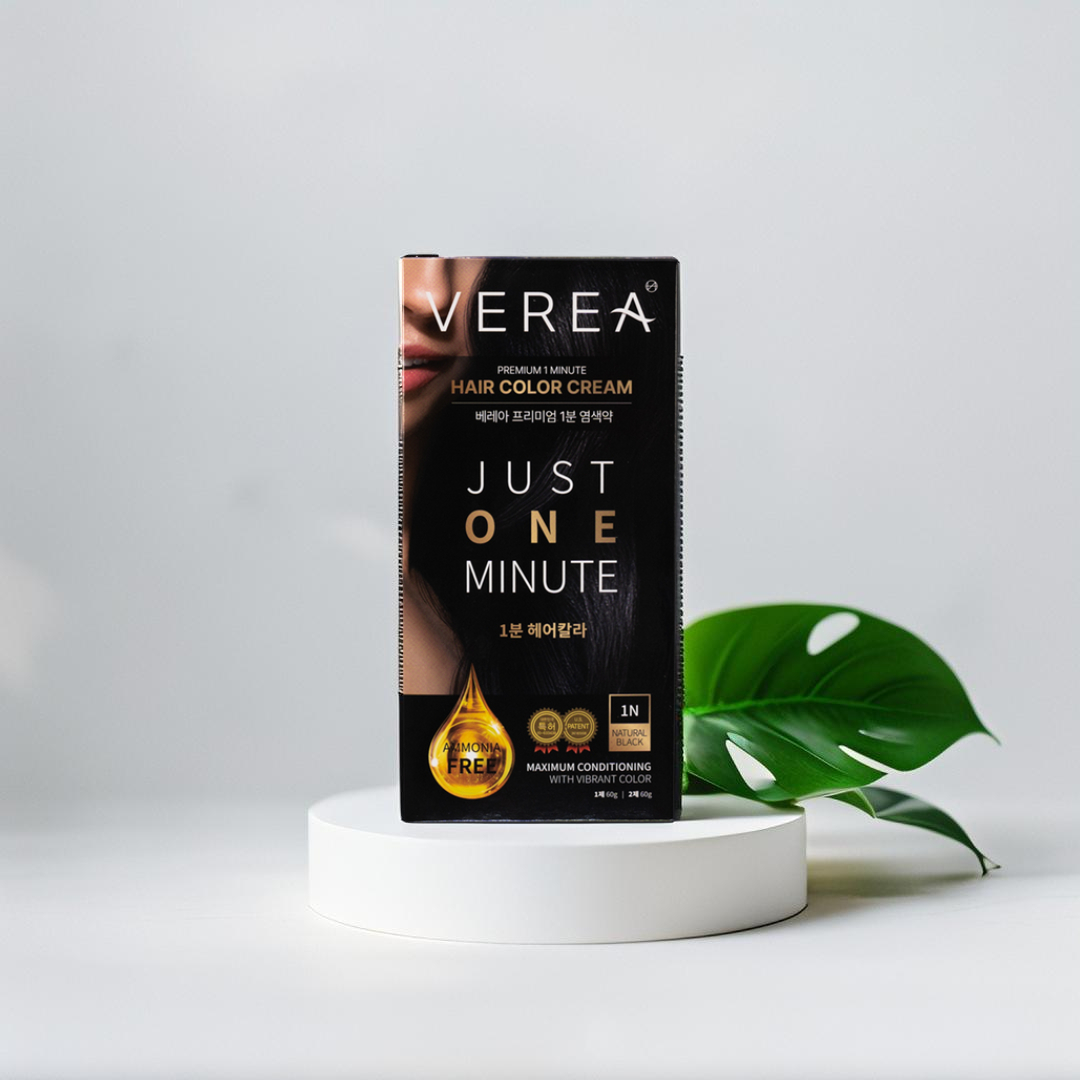
    VEREA’s base range is ten shades, split by purpose. Five are built for gray coverage — 1N Natural Black, 3N Dark Brown, 4N Natural Brown, 5N Choco Brown, 5R Red Brown. Five are fashion shades — 7N Light Brown, 7B Orange Brown, 8B Milk Brown, 9G Natural Blond, 9RG Light Blond. For a private label programme, which of those you take, how many, and what you call them are all open questions.

    The discipline is to launch narrow. A six-shade range that sells through beats a ten-shade range where four shades sit in your warehouse tying up cash.

    Lever three: the packaging (where your brand actually lives)

    Packaging is the part of the product the customer meets before they meet the formula, and it is the part that carries your regulatory text, your language, your shade chart and your price positioning. It is also, in most private label deals, the largest single decision you will make about how the product is perceived.

    Treat it as a market-by-market decision, not a global one, and get the mandatory information for your market confirmed before artwork begins, not after.

    Lever four: the kit (a cheap way to feel expensive)

    Hair color is bought as a kit, and the kit is a lever brand owners routinely underuse. VEREA ships with the color cream (60g), the developer (60g), an applicator comb, gloves, a shoulder cape and an instruction leaflet — and the applicator is not an accessory here, it is part of how the product works. Part 1 and Part 2 are squeezed onto the comb side by side, like toothpaste, and combed through the hair, which is what makes an even application possible without a bowl and brush.

    What goes in the box, and how it is presented, can be reworked for a private label programme. It is often the cheapest way to move a product up a price tier.

    Key facts a private label buyer should have on file

    • Processing time: 1 to 2 minutes, then rinse (versus 30 to 40 minutes for conventional permanent color).
    • 1-minute coloring technology patented in Korea and the United States.
    • Ammonia free; MIT, CMIT, benzophenone, triclosan and six heavy metals excluded.
    • Panthenol, Ceramide NP and Allantoin included for scalp and hair care.
    • Base range of ten shades; shades, packaging and kit contents can all be reworked.
    • A patch test is required 48 hours before coloring, and this must appear in your consumer instructions.

    What to ask for in the first conversation

    Samples, product documentation for your market’s registration process, and a straight answer on which of the four levers the factory will move for a partner of your size. Pricing, minimums and lead times in this category are agreed case by case, because they depend entirely on the shade count, the pack and the volume you land on — so bring your market and your volume expectation to the table, and you will get a specific answer rather than a brochure.

    The product, the shade range and the three partnership routes are set out on the VEREA site.

    Talk to VEREA about distribution, private label or OEM

    VEREA Premium 1 Minute Hair Color Cream is made in Korea by Dr.BOM and is open to distribution, private label and OEM partnerships. Tell us your market and the volume you have in mind and we will come back with samples, product documentation and terms.

    Related reading

  • How to Choose a Korean Hair Color Manufacturer: A Buyer’s Checklist

    How to Choose a Korean Hair Color Manufacturer: A Buyer’s Checklist

    Choosing a Korean hair color manufacturer is less about comparing quotations than about establishing five things: whether you are talking to the factory itself, who owns the formula, what in the product is genuinely differentiated, how much of it can be reworked for your market, and what documentation arrives with the goods. Get those right and the commercial terms follow. Get them wrong and a good price buys you a product you cannot defend on your own shelf.

    Korea is an obvious place to look. The country’s cosmetics industry is built around contract manufacturing, and “made in Korea” still carries weight with shoppers in a way that is difficult to buy any other way. But the same strengths make the market crowded, and a buyer’s first job is to separate the manufacturers from the layers in front of them.

    1. Are you talking to the factory or to a trader?

    This is the question that determines everything else. A trader can quote you a price; only a manufacturer can change a product.

    The tell is what happens when you ask for something non-standard. Ask whether the shade range can be cut from ten to six, whether the applicator can change, whether the outer carton can carry your regulatory text. A factory answers with a discussion about tooling, minimums and timelines. An intermediary answers with a delay while it asks someone else.

    VEREA is a useful illustration of the difference. The brand belongs to Dr.BOM, the Korean company that makes the cream, and the same product has left that factory for years as an OEM item under other companies’ names. When you talk to them about a private label programme, you are talking to the people who would actually produce it.

    2. Who owns the formula, and is it protected?

    Plenty of “exclusive” cosmetics turn out to be a stock base with a new fragrance. That is not automatically a problem — but you should know, because it decides whether the product is defensible.

    Ask directly whether the manufacturer owns the formulation and whether any part of it is protected. A registered patent is the strongest answer you can get. VEREA’s 1-minute coloring technology, for example, is registered as a patent in Korea and in the United States, which is why the speed claim on the box is something a competitor cannot simply copy onto theirs.

    3. What is actually different about the product?

    Hair color is a mature category and most differentiation is cosmetic. Before you commit, write down the one sentence your customer would repeat to a friend. If you cannot write it, the product is a commodity and you are buying on price alone.

    The differences that survive contact with a real shopper tend to be the ones they can feel in the first use: how long they have to sit still, whether the room smells of ammonia, whether the color went on evenly or ran down their neck. A one-to-two-minute processing time instead of thirty to forty is that kind of difference — the customer verifies it themselves the first time they use the product.

    Key facts to collect from any hair color factory

    • Processing time, and what the formula does to achieve it.
    • Whether the formula is ammonia free, and what else is excluded.
    • The caring ingredients, and whether they are present at a meaningful level or as a label claim.
    • The full shade range, split by gray coverage and fashion shades.
    • Everything in the kit: applicator, gloves, cape, leaflet.
    • Whether shades, packaging and kit contents can be changed for your market.

    4. How much can be reworked for your market?

    A range that works in Seoul is not automatically a range that works in Warsaw, Riyadh or São Paulo. Gray coverage carries the volume in some markets; brightening shades carry it in others. Pack sizes, price architecture and the language on the leaflet all vary.

    So ask what is modular. With VEREA the product ships as ten shades — five built for gray coverage (1N Natural Black through 5R Red Brown) and five fashion shades (7N Light Brown through 9RG Light Blond) — and for a private label or OEM programme the shade line-up, the naming, the packaging and the kit contents are all open to redesign. That flexibility is worth more than a small difference in unit cost, because it is the difference between launching a product and launching your product.

    5. What documentation comes with it?

    Hair color is a regulated category almost everywhere, and registration is where unprepared imports die. Before you talk price, ask what the manufacturer can supply for your market’s process: ingredient and specification documents, and samples for your own testing.

    Requirements differ by country and are agreed partner by partner, so treat any supplier who waves the question away as a warning sign. A factory that has exported the same formula for years under other brands has been through this before, and that experience is part of what you are buying.

    Running the checklist on a real product

    Applied to VEREA, the five questions have short answers: you are talking to the manufacturer, Dr.BOM; the 1-minute technology is patented in Korea and the United States; the differentiator is a processing time the shopper verifies on first use; the shades, packaging and kit are open for private label and OEM work; and product documentation and samples come with the conversation.

    You can see the product, the shade range and the partnership routes on the VEREA site before you get in touch.

    Talk to VEREA about distribution, private label or OEM

    VEREA Premium 1 Minute Hair Color Cream is made in Korea by Dr.BOM and is open to distribution, private label and OEM partnerships. Tell us your market and the volume you have in mind and we will come back with samples, product documentation and terms.

    Related reading